


The remedy opinion could drop any day. The industry has already set the line.
There’s no docket entry to watch. No hearing to livestream. No warning. When Judge Brinkema publishes her remedy opinion in United States v. Google, it will just appear. One morning the industry wakes up and the decision is there.
The liability phase is over. In April 2025, Judge Brinkema issued a 115-page opinion finding that Google illegally monopolized two markets: publisher ad serving (DFP) and the open web display exchange (AdX), and tied them together. That part is settled. The only question now is what actually changes.
The U.S. Department of Justice wants the structure unwound. Force Google to divest AdX, open source the DFP codebase, and establish a financial escrow to support publishers through the transition. If that fails, the ad server itself becomes the remedy. Google is pushing for behavioral changes instead. Interoperability requirements, removal of Unified Pricing Rules (UPR), and server to server integration with Prebid. Their position is that this addresses the conduct without destabilizing the system. Their lawyers called the divestiture proposal “radical and reckless.”
During closing arguments last November, Judge Brinkema gave some signal. She questioned the practicality of the DOJ’s more aggressive remedies, especially around who could realistically acquire AdX. A buyer like Microsoft introduces its own antitrust considerations. She also pointed to timing. AI is moving quickly through adtech, and a full structural remedy would play out over years of appeals. Behavioral remedies, at least, could be implemented sooner.
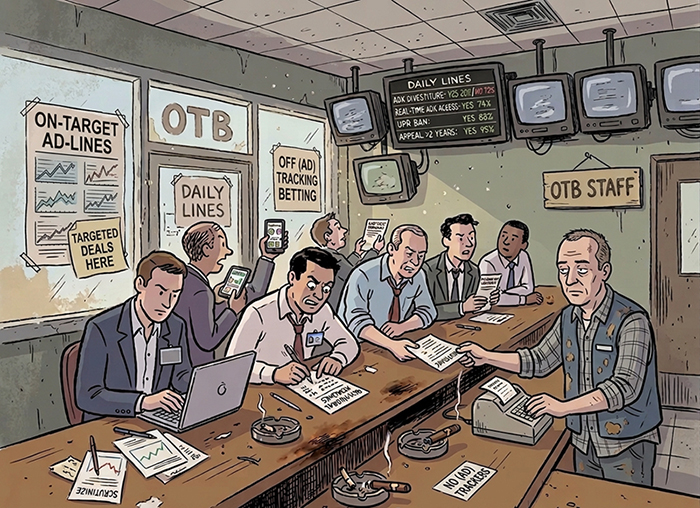
So I did what any adtech professional does when the timeline is uncertain. I asked a group of industry operators to set the line.
There’s a line I didn’t put on the board, and it’s probably the one that matters most to publishers. One platform-side executive pointed it out, without feeling the need to submit a line of his own.
“The real money line is on whether Judge Brinkema levels the playing field or not. Will she order that Google Ads and DV360 money be spent fairly and freely across third-party exchanges? Will she require that all exchanges get the same technical and commercial access to GAM?”
That reframes the question. Not just structure, but demand flow. Not just whether AdX is separated, but whether spend can actually move.
And that’s where this all connects.
The outcome I’m watching isn’t the headline. It’s what the open internet looks like by the time any of this actually takes effect.
This case was filed in 2023 against a market that already looks different in 2026. Open internet display is in secular decline. AI is compressing search referral traffic. CTV is where growth is consolidating. Even if the U.S. Department of Justice gets everything it asked for, it may be reshaping a part of the ecosystem that is no longer the center of gravity.
So the more relevant question isn’t whether Google has to sell AdX. It’s what the open internet looks like when enforcement kicks in. That’s the market I’d want a position in.
The consensus from the operators I spoke with lands somewhere in the middle. Meaningful behavioral constraints. Interoperability requirements. Some rollback of UPR. And a long appeal cycle that pushes any structural remedy years out. Not a clean break. Not status quo.
The ruling will matter, but the market shift matters more.